

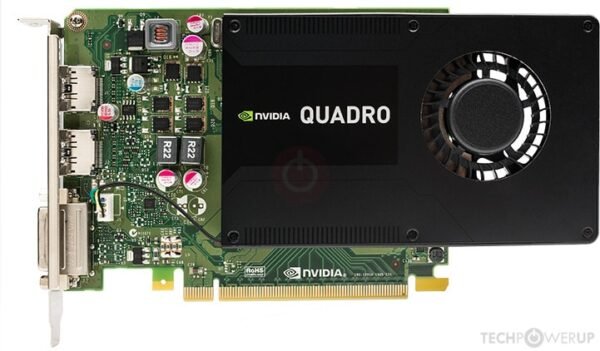

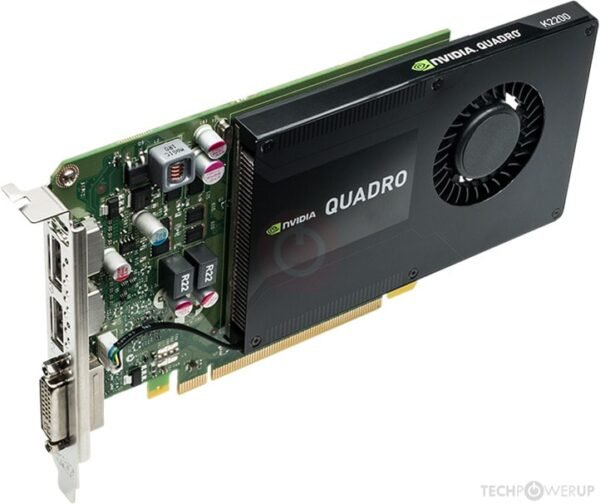
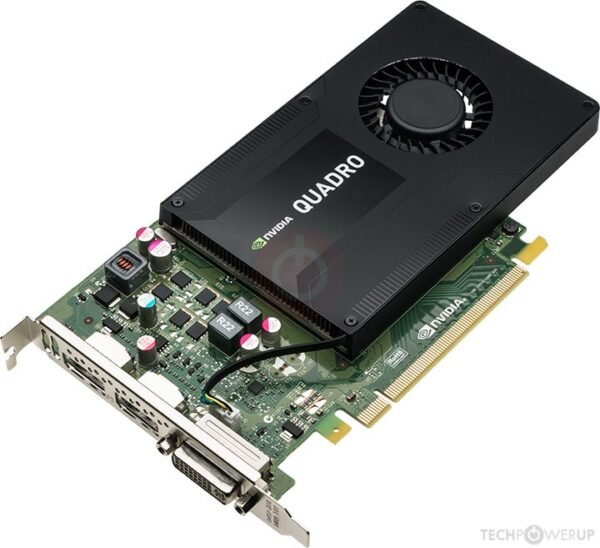
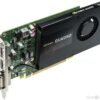
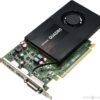
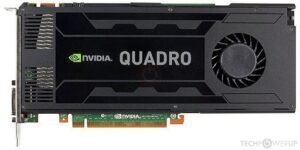
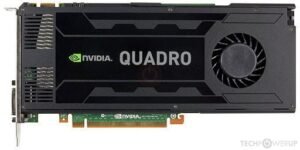
NVIDIA QUADRO K2200 4 GB GDDR5 128-bit
Key Features & Highlights
-
Memory / Bandwidth: 4 GB GDDR5, 128-bit memory interface, with ~ 80 GB/s bandwidth — allows smooth handling of large models, detailed textures and multi-window workflows.
-
CUDA Compute Power: 640 CUDA cores for fast shading, simulation and rendering tasks.
-
Bus & Interface: PCI Express 2.0 ×16. Single-slot form factor.
-
Display / Outputs: Dual DisplayPort 1.2 + 1 Dual-Link DVI-I. Supports up to 3 direct displays, or up to 4 displays via DisplayPort MST. Max resolution up to 3840×2160 @ 60 Hz via DisplayPort.
-
Power & Cooling: Max power draw about 68 W, with an ultra-quiet active cooling fan. Suitable for workstations with moderate power and thermal constraints.
Key Features & Highlights
-
Memory / Bandwidth: 4 GB GDDR5, 128-bit memory interface, with ~ 80 GB/s bandwidth — allows smooth handling of large models, detailed textures and multi-window workflows.
-
CUDA Compute Power: 640 CUDA cores for fast shading, simulation and rendering tasks.
-
Bus & Interface: PCI Express 2.0 ×16. Single-slot form factor.
-
Display / Outputs: Dual DisplayPort 1.2 + 1 Dual-Link DVI-I. Supports up to 3 direct displays, or up to 4 displays via DisplayPort MST. Max resolution up to 3840×2160 @ 60 Hz via DisplayPort.
-
Power & Cooling: Max power draw about 68 W, with an ultra-quiet active cooling fan. Suitable for workstations with moderate power and thermal constraints.
Best Use Cases
-
CAD / CAM work (AutoCAD, SolidWorks, etc.), product design and engineering visualizations.
-
3D modeling and rendering workflows (medium complexity).
-
Multi-monitor display setups for productivity, control rooms, design studios.
-
Media tasks: video editing, compositing where GPU acceleration helps.
Limitations / Considerations
-
Though 4 GB is good, very large scenes, ultra-high resolution textures, or very dense simulations might push its limits.
-
Not designed for modern AAA gaming; gaming performance will be limited compared to consumer gaming cards.
-
Being a PCIe 2.0 card, in newer systems with PCIe 4.0/5.0 you won’t get the latest interface speed improvements (though for many workloads this won’t be a big bottleneck).
Reviews
There are no reviews yet.