

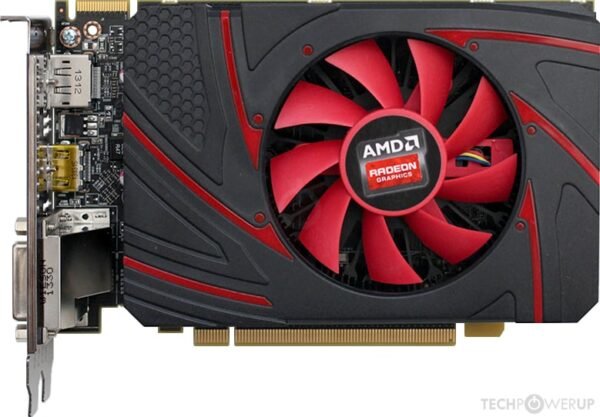
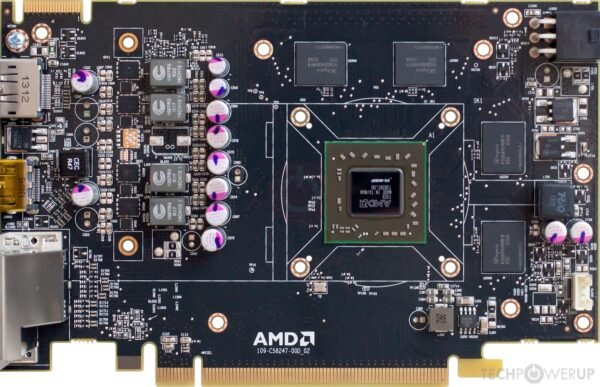
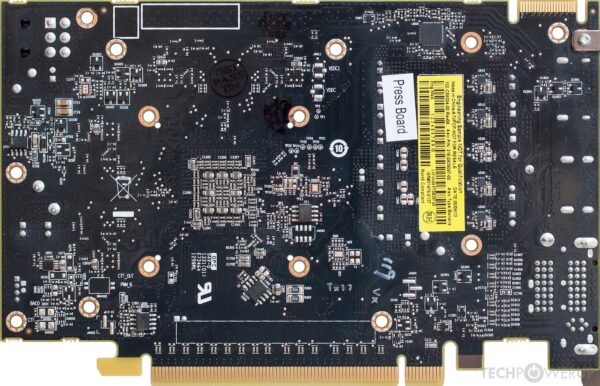
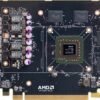
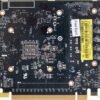
AMD RADEON R7 260X 2GB GDDR5 128 bit
Specifications & Key Data:
| Component | Detail |
|---|---|
| GPU / Architecture | AMD “Bonaire XTX”, part of the Radeon R7 200 series (GCN 2.0) |
| Process | 28 nm |
| Stream Processors (Shader Units) | 896 |
| Texture Mapping Units (TMUs) | 56 |
| Render Output Units (ROPs) | 16 |
| VRAM | 2 GB GDDR5 |
| Memory Interface | 128-bit |
| Memory Bandwidth | ~ 104 GB/s in standard spec; somewhat lower in reduced/OC variants |
| Core Clock | ~ 1100 MHz typical; variants may be a little lower or higher (OC versions) |
| Power / TDP | ~ 115 W |
| Power Connector | One 6-pin PCIe power connector usually required |
| Outputs | Usually includes DVI (dual-link), HDMI, DisplayPort, etc. |
Specifications & Key Data:
| Component | Detail |
|---|---|
| GPU / Architecture | AMD “Bonaire XTX”, part of the Radeon R7 200 series (GCN 2.0) |
| Process | 28 nm |
| Stream Processors (Shader Units) | 896 |
| Texture Mapping Units (TMUs) | 56 |
| Render Output Units (ROPs) | 16 |
| VRAM | 2 GB GDDR5 |
| Memory Interface | 128-bit |
| Memory Bandwidth | ~ 104 GB/s in standard spec; somewhat lower in reduced/OC variants |
| Core Clock | ~ 1100 MHz typical; variants may be a little lower or higher (OC versions) |
| Power / TDP | ~ 115 W |
| Power Connector | One 6-pin PCIe power connector usually required |
| Outputs | Usually includes DVI (dual-link), HDMI, DisplayPort, etc. |
⚡ Real-World Performance:
Here’s how it performs in actual use (older games, modern less demanding titles, etc.):
-
In games like Bioshock Infinite, at medium settings and resolutions around 1680×1050, it can deliver respectable fps. But pushing to full HD (1920×1080) often requires lowering settings to maintain smooth gameplay.
-
It’s faster than many very old cards, especially compared to entry-level GPUs of its time (e.g. compared to older HD 7000-series or low-end NVIDIA cards) in its era.
-
However, for very modern, graphically intense games (AAA titles from recent years), at high settings, or for tasks like high-res video editing / GPU compute, its performance will lag noticeably.
Strengths:
-
Decent for older or less demanding games / eSports titles (League of Legends, CS:GO, Dota 2, etc.) at medium settings.
-
Good value if you can get it cheaply (used), for basic gaming or as a budget build.
-
Relatively low power demands compared to more modern high-end cards, though still needs a decent PSU and cooling.
-
Supports multiple display outputs, decent driver support (being an AMD GPU) for standard graphics APIs (DirectX, OpenGL, Vulkan) albeit with limitations.
Reviews
There are no reviews yet.