

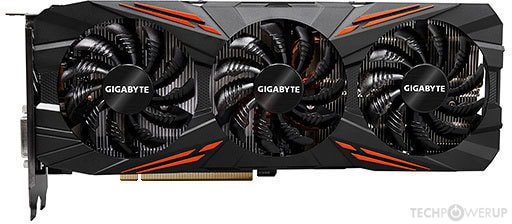
GIGABYTE G-FORCE GTX 1070 8GB GDDR5 256 bit
Key Specifications:
-
GPU architecture: NVIDIA Pascal (GP104)
-
CUDA / Stream processors: 1920
-
Memory: 8 GB GDDR5 (256-bit memory bus)
-
Memory bandwidth: ~ 256 GB/s
-
Base / Boost clocks (reference): ~ 1506 MHz base / ~ 1683 MHz boost; overclocked/partner variants often higher.
-
TDP / Power draw: ~ 150 W typical. Recommended PSU around 450-500 W for safe margin.
-
Display outputs: Typical configuration includes DisplayPort(s), HDMI, DVI.
Key Specifications:
-
GPU architecture: NVIDIA Pascal (GP104)
-
CUDA / Stream processors: 1920
-
Memory: 8 GB GDDR5 (256-bit memory bus)
-
Memory bandwidth: ~ 256 GB/s
-
Base / Boost clocks (reference): ~ 1506 MHz base / ~ 1683 MHz boost; overclocked/partner variants often higher.
-
TDP / Power draw: ~ 150 W typical. Recommended PSU around 450-500 W for safe margin.
-
Display outputs: Typical configuration includes Display-Port(s), HDMI, DVI.
Real-World Performance (2024-25)
What you can expect when using a GTX 1070 in modern gaming and usage:
-
Excellent performance at 1080p, often with high to very high settings in many modern AAA games, and ultra settings in older/light-demand games.
-
At 1440p, still very usable: many games will run smoothly with settings dialed down (high / medium / a mix). In very demanding titles, you might drop some settings like shadows, anti-aliasing, etc., to sustain frame rate.
-
For esports / fast-paced competitive titles (CS:GO, Valorant, Apex Legends, Overwatch etc.), it gives very good FPS even in 144 Hz monitors if settings are reasonable.
-
VR usage is viable—GTX 1070 is “VR-ready” and works decently with most current VR headsets.
-
Not great for native 4K high settings — performance drops, and 8 GB VRAM becomes a limiting factor especially with high texture packs or when games use lots of memory. Upscaling (DLSS, or using lower resolution + upscaling) helps.
Reviews
There are no reviews yet.