

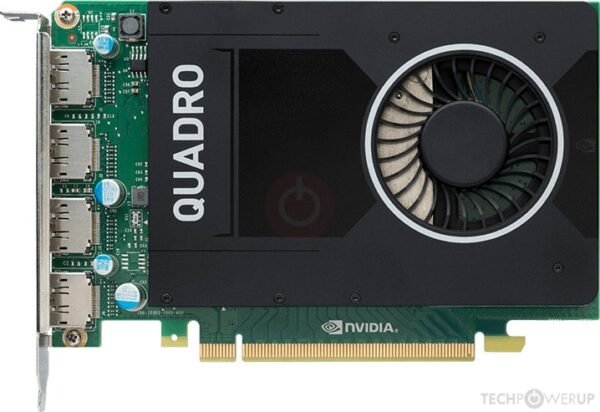

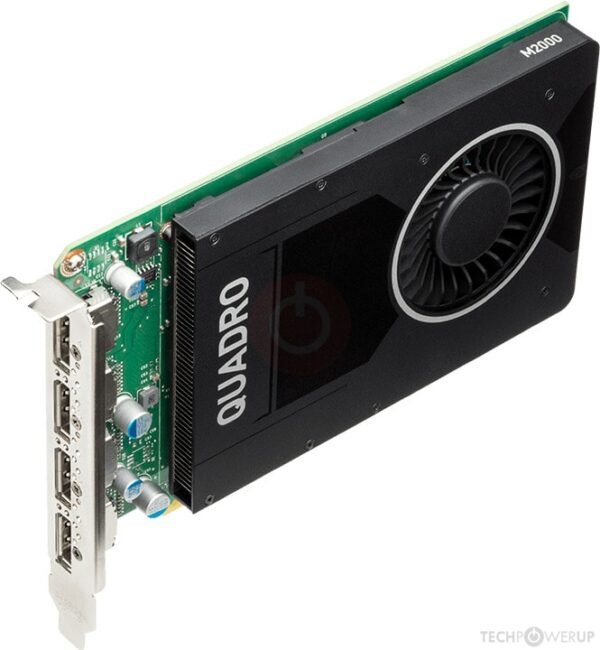
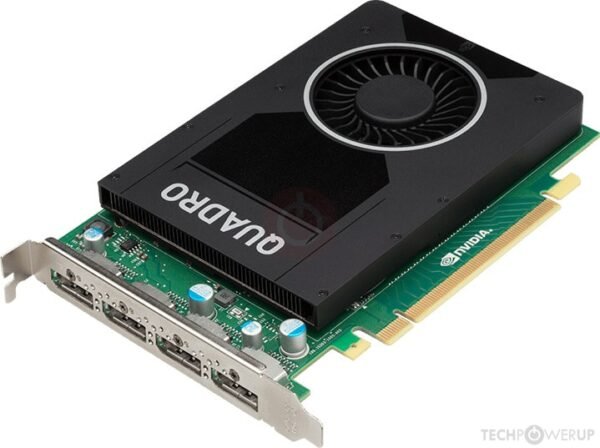
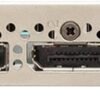
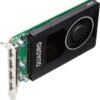
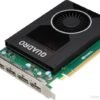
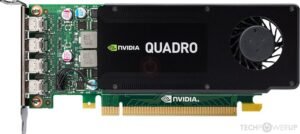
NVIDIA QUADRO M2000 4 GB GDDR5 128 bit
Key Features & Highlights:
-
4 GB GDDR5 Memory — ample for medium to large models, handling GPU-accelerated tasks comfortably.
-
Memory Interface / Bandwidth: 128-bit interface, ~ 105-106 GB/s bandwidth.
-
CUDA Cores: 768 — good compute power for rendering, viewport performance, and simulation.
-
Display Support: 4 × DisplayPort 1.2 outputs, up to 4K (4096 × 2160) @ 60 Hz on each via DisplayPort.
-
Power & Efficiency: 75 W TDP; single-slot design; no extra power connector needed.
-
Interface & Compatibility: PCI Express 3.0 x16; supports professional APIs including DirectX 12, OpenGL 4.5, Vulkan, CUDA.
-
Form Factor: Compact and single-slot (about 201 mm length, ~6.6″). Ideal for workstation towers with limited space.
Key Features & Highlights:
-
4 GB GDDR5 Memory — ample for medium to large models, handling GPU-accelerated tasks comfortably.
-
Memory Interface / Bandwidth: 128-bit interface, ~ 105-106 GB/s bandwidth.
-
CUDA Cores: 768 — good compute power for rendering, viewport performance, and simulation.
-
Display Support: 4 × DisplayPort 1.2 outputs, up to 4K (4096 × 2160) @ 60 Hz on each via DisplayPort.
-
Power & Efficiency: 75 W TDP; single-slot design; no extra power connector needed.
-
Interface & Compatibility: PCI Express 3.0 x16; supports professional APIs including DirectX 12, OpenGL 4.5, Vulkan, CUDA.
-
Form Factor: Compact and single-slot (about 201 mm length, ~6.6″). Ideal for workstation towers with limited space.
Strengths for Professionals:
-
Excellent for multi-monitor setups (e.g. data visualization, control rooms, editing suites) where you need 4 native displays.
-
Good balance of performance vs power—less heat, quieter systems while still enabling GPU-accelerated workloads.
-
Certified drivers and tested compatibility in professional software (CAD, modeling, rendering).
-
Can accelerate video editing and playback tasks like HEVC (hardware encode/decode).
Limitations / Considerations:
-
4 GB of VRAM is solid, but may be limiting in extremely large scenes or ultra-high-resolution texture work.
-
Not a gaming-focused card; performance in modern AAA games will lag behind gaming GPUs.
-
While PCIe 3.0 is current, the card won’t benefit from future PCIe increases unless you upgrade.
-
As technology advances, newer cards with more VRAM, higher bandwidth, or newer architectures might provide better long-term investment.
Reviews
There are no reviews yet.